


When people search for “what religious holiday is today,” they are often looking for something more than just a date on the calendar. They want meaning. They want context. They want to know whether today carries spiritual significance for millions of people somewhere in the world.
Religious holidays shape cultures, influence traditions, and bring communities together. From quiet days of fasting to vibrant festivals filled with music and color, sacred observances remind people of faith, history, gratitude, and renewal.
In this in-depth guide, we’ll explore how to determine what religious holiday is today, how different faith traditions structure their sacred calendars, and highlight major holidays across Christianity, Islam, Judaism, Hinduism, Buddhism, and other global religions.
Why Religious Holidays Matter
Religious holidays are not just ritual events. They represent:
- Spiritual reflection
- Historical remembrance
- Cultural identity
- Community bonding
- Acts of devotion and charity
For many believers, sacred days mark turning points in spiritual life. They can symbolize liberation, sacrifice, enlightenment, revelation, or renewal.
The answer to “what religious holiday is today” depends entirely on the calendar system and religious tradition you are exploring. Unlike national holidays, religious observances often follow lunar or lunisolar calendars rather than the standard Gregorian calendar.
Major Religious Traditions and Their Sacred Calendars
Let’s explore how different faiths determine their holy days.
Christianity
Christian holidays are largely based on the liturgical calendar. The most important celebrations revolve around the life and teachings of Jesus Christ.
Key Christian Holidays
- Christmas
- Easter
- Good Friday
- Pentecost
- Ash Wednesday
Christmas
Celebrated on December 25, Christmas marks the birth of Jesus Christ. In countries like the United States, the United Kingdom, and many parts of Europe, it is both a religious and cultural celebration.
Easter
Easter commemorates the resurrection of Jesus. Unlike Christmas, its date changes every year because it follows a lunar calculation based on the first Sunday after the first full moon following the spring equinox.
Denominations and Differences
Different Christian denominations observe additional saints’ days and feast days. For example:
- Roman Catholics follow a detailed liturgical calendar.
- Orthodox Christians use the Julian calendar for certain holidays, meaning dates may differ from Western Christianity.
If you’re asking what religious holiday is today within Christianity, checking a church liturgical calendar is the best approach.
Islam
Islamic holidays follow the Hijri calendar, which is strictly lunar. Because the Islamic year is about 11 days shorter than the Gregorian year, Islamic holidays shift each year.
Major Islamic Holidays
- Eid al-Fitr
- Eid al-Adha
- Ramadan (month of fasting)
- Mawlid al-Nabi
Ramadan
Ramadan is the ninth month of the Islamic calendar. Muslims fast from dawn to sunset, focusing on prayer, charity, and spiritual growth.
Eid al-Fitr
This holiday marks the end of Ramadan. It is celebrated with communal prayers, feasts, and charity (Zakat al-Fitr).
Eid al-Adha
Known as the Festival of Sacrifice, this holiday commemorates Prophet Ibrahim’s devotion to God.
Since Islamic holidays depend on moon sightings, the exact start date can vary slightly by region. If you are in Pakistan, Saudi Arabia, or what religious holiday is today Indonesia, local moon sighting committees often determine the official date.
Judaism
Jewish holidays follow the Hebrew calendar, which is lunisolar. This means it aligns with both the moon and the solar year.
Major Jewish Holidays
- Rosh Hashanah
- Yom Kippur
- Passover
- Hanukkah
- Sukkot
Rosh Hashanah
The Jewish New Year, a time of reflection and repentance.
Yom Kippur
The Day of Atonement, considered the holiest day in Judaism.
Passover
Commemorates the Exodus of the Israelites from Egypt.
Because Jewish days begin at sunset, if you’re asking what religious holiday is today, timing matters. A holiday may begin the evening before.
Hinduism
Hindu holidays follow a complex what religious holiday is today lunisolar calendar. Many festivals are based on the phases of the moon.
Major Hindu Festivals
- Diwali
- Holi
- Navratri
- Raksha Bandhan
- Janmashtami
Diwali
Known as the Festival of Lights, Diwali symbolizes the victory of light over darkness.
Holi
A spring festival celebrated with colors, marking the triumph of good over evil.
Hindu festivals can vary regionally. In India and Nepal, for example, certain dates may differ slightly.
Buddhism
Buddhist holidays vary depending on the country and tradition.
Major Buddhist Observances
- Vesak
- Magha Puja
- Asalha Puja
Vesak
One of the most important Buddhist festivals, Vesak commemorates the birth, enlightenment, and death of the Buddha.
Countries like Sri Lanka, Thailand, and Myanmar celebrate Vesak as a national holiday.
Other Religious Observances Around the World
Beyond the major world religions, many other faith traditions observe sacred days.
Sikhism
- Vaisakhi
- Gurpurab
Baháʼí Faith
- Naw-Rúz
- Ridván
Jainism
- Mahavir Jayanti
- Paryushana
Each of these holidays carries deep historical and spiritual meaning for followers.
How to Find Out What Religious Holiday Is Today
To accurately determine today’s religious observance, consider the following:
1. Check a Multi-Faith Calendar
Many online calendars list daily religious holidays across traditions.
2. Consider Your Geographic Location
Moon sightings and regional customs what religious holiday is today may influence dates.
3. Identify the Calendar System
- Gregorian (solar)
- Lunar
- Lunisolar
4. Time of Day Matters
In Judaism and Islam, holidays may begin at sunset rather than midnight.
The Cultural Impact of Religious Holidays
Religious holidays influence:
- School schedules
- National public holidays
- Workplace closures
- Travel patterns
- Food traditions
For example:
- Christmas impacts global retail markets.
- Ramadan changes daily routines in Muslim-majority countries.
- Diwali drives massive consumer spending in India.
Sacred days often shape entire economies.
Interfaith Awareness in a Globalized World
In today’s interconnected world, understanding different religious holidays promotes respect and inclusion.
Companies increasingly recognize:
- Eid celebrations
- Hanukkah observances
- Lunar New Year traditions
- Diwali festivities
Schools and workplaces often provide accommodations for diverse faith observances.
Why Religious Holidays Change Dates
Many people are surprised when holidays shift annually.
Here’s why:
- Lunar calendars have 354 days.
- Solar calendars have 365 days.
- Lunisolar calendars adjust with leap months.
Because of these differences, the answer to “what religious holiday is today” changes every year.
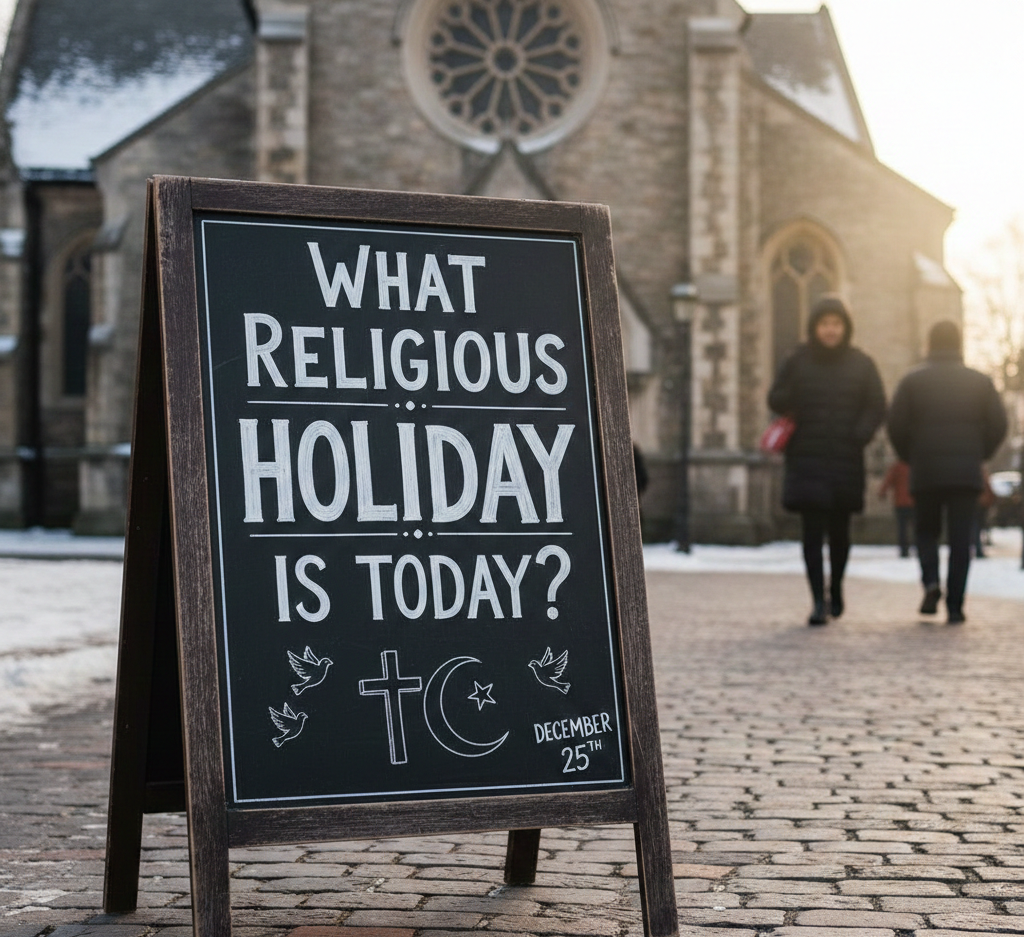
Religious Holidays and Modern Technology
Today, technology makes it easier than ever to track sacred observances.
- Smartphone calendar apps
- Interfaith holiday trackers
- Religious organization websites
- Moon sighting apps
Global connectivity ensures that even diaspora communities can stay connected to their traditions.
The Spiritual Meaning Behind the Question
When someone searches what religious holiday is today, they might be:
- Planning to greet a friend appropriately
- Preparing for prayer or fasting
- Teaching children about diversity
- Seeking spiritual connection
The question reflects curiosity and respect.
Frequently Asked Questions
Do all religions celebrate holidays?
Most religious traditions observe sacred days, though the number and type vary widely.
Why do some holidays last multiple days?
Some observances commemorate extended historical events or involve multiple ritual stages.
Can multiple religious holidays fall on the same day?
Yes. Because different religions use different calendars, overlaps are common.
Conclusion
The question what religious holiday is today opens the door to a deeper understanding of global faith traditions. Around the world, millions of people may be celebrating, fasting, praying, or reflecting on this very day