


Cordless power tools have completely transformed the way professionals and DIY enthusiasts approach construction, renovation, woodworking, automotive repair, and home improvement projects. Once considered underpowered alternatives to corded equipment, modern battery-driven tools now deliver impressive torque, longer runtimes, and unmatched portability.
From small household fixes to large-scale commercial jobs, cordless equipment offers convenience, safety, and productivity without being tied to an electrical outlet. In this comprehensive guide, you’ll explore how cordless power tools work, their Cordless power tools advantages, the most popular types, battery technologies, maintenance tips, and how to choose the right tools for your needs.
What Are Cordless Power Tools?
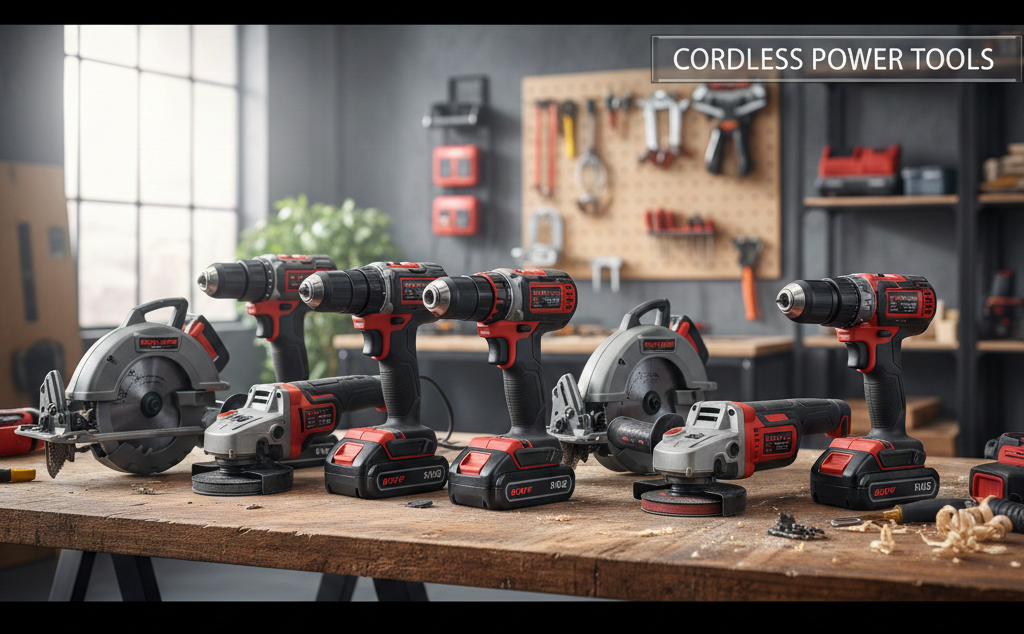
Cordless power tools are electrically powered devices that operate using rechargeable battery packs instead of being connected to a wall outlet. These tools use high-capacity lithium-ion batteries and advanced brushless motors to provide consistent power output and improved efficiency.
Unlike traditional corded tools, they allow unrestricted movement, making them ideal for outdoor projects, job sites without reliable electricity, and tight spaces where cords may become hazardous.
Why Cordless Power Tools Are So Popular
The rise in popularity of cordless equipment is not accidental. Several key factors contribute to their widespread adoption:
1. Portability and Freedom
No cords mean greater flexibility. You can work in remote locations, rooftops, gardens, or construction sites without worrying about extension cables.
2. Improved Safety
Cords can create tripping hazards and electrical risks. Battery-powered tools eliminate these concerns.
3. Lightweight Designs
Manufacturers now design compact and ergonomic tools that reduce fatigue during long working hours.
4. Rapid Charging Technology
Modern battery systems recharge quickly, minimizing downtime.
5. Comparable Power to Corded Tools
Advancements in lithium-ion batteries and brushless motor technology have significantly increased performance levels.
Types of Cordless Power Tools
There is a wide range of battery-operated equipment available today. Below are the most commonly used categories.
Cordless Drill Drivers
These are the most versatile tools in any toolkit. They are used for drilling holes and driving screws into wood, metal, plastic, and masonry (with appropriate bits).
Key features:
- Adjustable torque settings
- Variable speed control
- Keyless chuck system
Cordless Impact Drivers
Impact drivers provide high torque output, making them ideal for driving long screws and bolts. They are especially useful in construction and automotive work.
Cordless Circular Saws
Used for cutting wood, plywood, and other materials. These saws offer mobility for framing, deck building, and remodeling projects.
Cordless Angle Grinders
Perfect for cutting, grinding, and polishing metal or masonry surfaces.
Cordless Jigsaws
Designed for curved and intricate cuts in wood and metal.
Cordless Reciprocating Saws
Often used in demolition work, plumbing, and remodeling.
Cordless Nail Guns
Eliminate the need for compressors and hoses, making trim and framing work much more efficient.
Cordless Sanders
Used for smoothing wood surfaces and preparing materials for finishing.
Cordless Lawn and Garden Tools
Battery-powered lawn mowers, hedge trimmers, and leaf blowers have gained popularity due to quiet operation and low maintenance.
Understanding Battery Technology
The heart of any cordless power tool is its battery. Choosing the right battery platform is crucial for performance and longevity.
Lithium-Ion Batteries
Lithium-ion batteries dominate the market because they:
- Provide consistent power output
- Have higher energy density
- Charge quickly
- Have minimal memory effect
- Are lightweight
Voltage Ratings
Voltage determines the power potential of a tool. Common voltage ranges include:
- 12V: Compact tools for light tasks
- 18V/20V: Ideal for general construction and home improvement
- 36V and above: Heavy-duty industrial applications
Amp-Hour (Ah) Rating
Amp-hours measure battery capacity. Higher Ah means longer runtime.
Example:
- 2.0Ah: Lightweight and portable
- 5.0Ah: Extended use
- 8.0Ah+: Heavy-duty operations
Brushless vs. Brushed Motors
Motor type greatly impacts efficiency and durability.
Brushed Motors
- Less expensive
- Require more maintenance
- Produce more heat
Brushless Motors
- Longer lifespan
- More efficient
- Provide better torque
- Reduce battery drain
Most premium cordless power tools now use brushless motor technology.
Advantages Over Corded Tools
While corded tools still have their place, battery-powered equipment offers several advantages:
| Feature | Cordless | Corded |
|---|---|---|
| Mobility | Excellent | Limited |
| Setup Time | Quick | Requires extension |
| Safety | No trip hazard | Cord hazards |
| Power Consistency | Advanced models stable | Continuous |
| Maintenance | Lower | Moderate |
Choosing the Right Cordless Power Tools
Selecting the right tools depends on your specific needs.
1. Determine Usage Level
- DIY projects
- Professional construction
- Industrial applications
2. Choose a Battery Platform
Sticking with one brand platform allows battery compatibility across multiple tools.
3. Consider Ergonomics
Comfortable grip and balanced weight reduce strain.
4. Check Warranty
Look for at least 2–5 years of warranty coverage.
5. Evaluate Charging Speed
Fast chargers improve workflow efficiency.
Top Brands in the Market
Several manufacturers dominate the cordless equipment industry due to quality and innovation.
- DeWalt
- Makita
- Milwaukee Tool
- Bosch
- Ryobi
Each brand offers various battery platforms and tool combinations.
Maintenance Tips for Longevity
Proper care extends tool life and maintains performance.
Battery Care
- Avoid full discharge regularly
- Store in moderate temperatures
- Use compatible chargers
Cleaning
- Remove dust and debris after use
- Clean air vents
- Wipe battery terminals
Storage
- Keep tools in a dry environment
- Use protective cases
Common Applications
Cordless power tools are widely used in:
- Construction projects
- Carpentry
- Automotive repair
- Plumbing
- Electrical installations
- Home renovations
- Landscaping
Their flexibility makes them essential for professionals and homeowners alike.
Safety Guidelines
While cordless equipment eliminates electrical cord hazards, safety remains essential.
- Wear protective gloves
- Use safety goggles
- Follow manufacturer instructions
- Remove battery before changing accessories
- Keep tools away from children
Future of Cordless Power Tools
The future looks promising with advancements in:
- Higher capacity batteries
- Faster charging technology
- Smart connectivity via Bluetooth
- Enhanced durability
- Eco-friendly battery recycling programs
Manufacturers continue to invest in research to increase efficiency while reducing environmental impact.
Environmental Benefits
Battery-powered tools are often quieter and produce zero direct emissions, making them suitable for indoor and residential environments. Additionally, many brands now offer recycling programs for used battery packs.
Cost Considerations
While cordless power tools may have higher initial costs compared to corded models, long-term benefits include:
- Reduced electricity usage
- Lower maintenance costs
- Increased productivity
- Fewer replacement parts
Combo kits often provide better value when purchasing multiple tools together.
Cordless Power Tools for DIY Enthusiasts
For beginners, starting with:
- Drill driver
- Impact driver
- Circular saw
is usually sufficient for most household tasks.
Compact 12V systems are ideal for light-duty projects such as furniture assembly and wall mounting.
Cordless Power Tools for Professionals
Professionals often require:
- High torque impact wrenches
- Heavy-duty circular saws
- Advanced brushless systems
- Multiple battery packs
High-capacity batteries ensure uninterrupted workflow on large job sites.
Common Mistakes to Avoid
- Buying incompatible battery systems
- Ignoring torque ratings
- Using incorrect attachments
- Overcharging batteries
- Neglecting maintenance
Frequently Asked Questions
Are cordless power tools powerful enough for heavy-duty tasks?
Yes, modern high-voltage systems can handle demanding applications effectively.
How long do batteries last?
Typically 3–5 years depending on usage and care.
Can batteries be interchanged?
Only within the same brand platform and voltage system.
Are cordless tools more expensive?
Initial costs may be higher, but long-term convenience offsets expenses.
Final Thoughts
Cordless power tools represent a major advancement in modern tool technology. With powerful lithium-ion batteries, brushless motors, and innovative design improvements, they now compete directly with corded models in both performance and durability