


In recent years, green tea has gained global recognition for its wellness benefits, but among all varieties, ceremonial grade matcha stands apart as the purest and most refined form. Known for its vibrant color, smooth taste, and deep cultural roots, this finely milled green tea powder represents centuries of Japanese tradition and craftsmanship.
Whether you are new to matcha or looking to understand what makes ceremonial quality special, this comprehensive guide explores its origins, production process, health benefits, preparation techniques, flavor profile, and how to choose the best product.
What Is Ceremonial Grade Matcha?
Ceremonial grade matcha is the highest quality form of powdered green tea made from specially grown and processed tea leaves. It is traditionally used in Japanese tea ceremonies and consumed on its own with hot water—without milk, sweeteners, or flavorings.
Unlike culinary matcha, which is designed for cooking and baking, ceremonial grade is crafted specifically for drinking in its purest form. It features:
- Bright, vibrant green color
- Ultra-fine texture
- Naturally sweet, smooth flavor
- Minimal bitterness
Its delicate taste and silky consistency make it ideal for traditional tea preparation.
The Historical Origins of Matcha
The roots of matcha trace back over a thousand years. Although tea cultivation began in China, powdered green tea was brought to Japan by Buddhist monks during the 12th century. Over time, Japan refined the cultivation and preparation methods, turning matcha into a cultural and spiritual symbol.
One of the most influential figures in matcha’s history was Sen no Rikyū, a 16th-century tea master who shaped the philosophy and aesthetic principles of the Japanese tea ceremony.
Today, ceremonial matcha remains deeply connected to the tradition known as Japanese tea ceremony, a ritual centered on harmony, respect, purity, and tranquility.
How Ceremonial Grade Matcha Is Grown
The cultivation process plays a critical role in determining quality.
1. Shade-Grown Tea Plants
Approximately three to four weeks before harvest, tea plants are covered with shade cloths. This reduces sunlight exposure, which:
- Boosts chlorophyll production
- Enhances amino acid levels
- Creates vibrant green color
- Develops natural sweetness
The increased L-theanine content contributes to matcha’s calm yet focused energy effect.
2. Hand-Selected Young Leaves
Only the youngest, most tender leaves from the first harvest (spring) are used for ceremonial quality. These leaves are richer in nutrients and flavor.
3. Steaming and Drying
After harvest, the leaves are quickly steamed to prevent oxidation, preserving their green color and fresh taste.
4. Stone Grinding
The dried leaves, known as tencha, are carefully stone-ground into an ultra-fine powder. Traditional stone mills rotate slowly to prevent heat buildup, which could damage flavor and nutrients.
What Makes Ceremonial Grade Different?
Understanding the differences between grades helps consumers make informed choices.
Color
Ceremonial grade has a vivid, bright green hue. Dull or yellowish tones indicate lower quality.
Texture
The powder should feel silky and fine—almost like talcum powder.
Taste
Expect:
- Smooth texture
- Mild natural sweetness
- Creamy mouthfeel
- Little to no bitterness
Culinary grade, by contrast, may taste stronger or slightly bitter, making it suitable for blending with milk or sweeteners.
Flavor Profile Explained
Ceremonial matcha offers a unique flavor experience often described as:
- Umami-rich
- Lightly vegetal
- Slightly sweet
- Creamy
- Fresh
The umami taste comes from high levels of L-theanine and amino acids developed during shading.
When properly prepared, the tea should not taste harsh or overly grassy.
Health Benefits of Ceremonial Grade Matcha
Matcha is celebrated worldwide for its impressive nutritional profile.
1. Rich in Antioxidants
Matcha contains high concentrations of catechins, particularly EGCG (epigallocatechin gallate), known for supporting cellular health.
2. Calm, Focused Energy
The combination of caffeine and L-theanine creates sustained alertness without the jittery crash associated with coffee.
3. Supports Metabolism
Some studies suggest green tea compounds may help boost metabolism and support weight management.
4. Detox Support
The high chlorophyll content from shade-grown leaves contributes to natural detoxification processes.
5. Immune System Support
Antioxidants help combat oxidative stress, supporting overall wellness.
Caffeine Content Compared to Coffee
Ceremonial grade matcha contains moderate caffeine—typically less than coffee per serving.
However, its effects differ:
- Coffee delivers a rapid spike in energy.
- Matcha provides gradual, sustained alertness.
This smoother experience makes it popular among professionals, students, and creatives seeking focus.
Traditional Preparation Method
Preparing ceremonial grade matcha properly enhances its flavor and texture.
Tools You Need
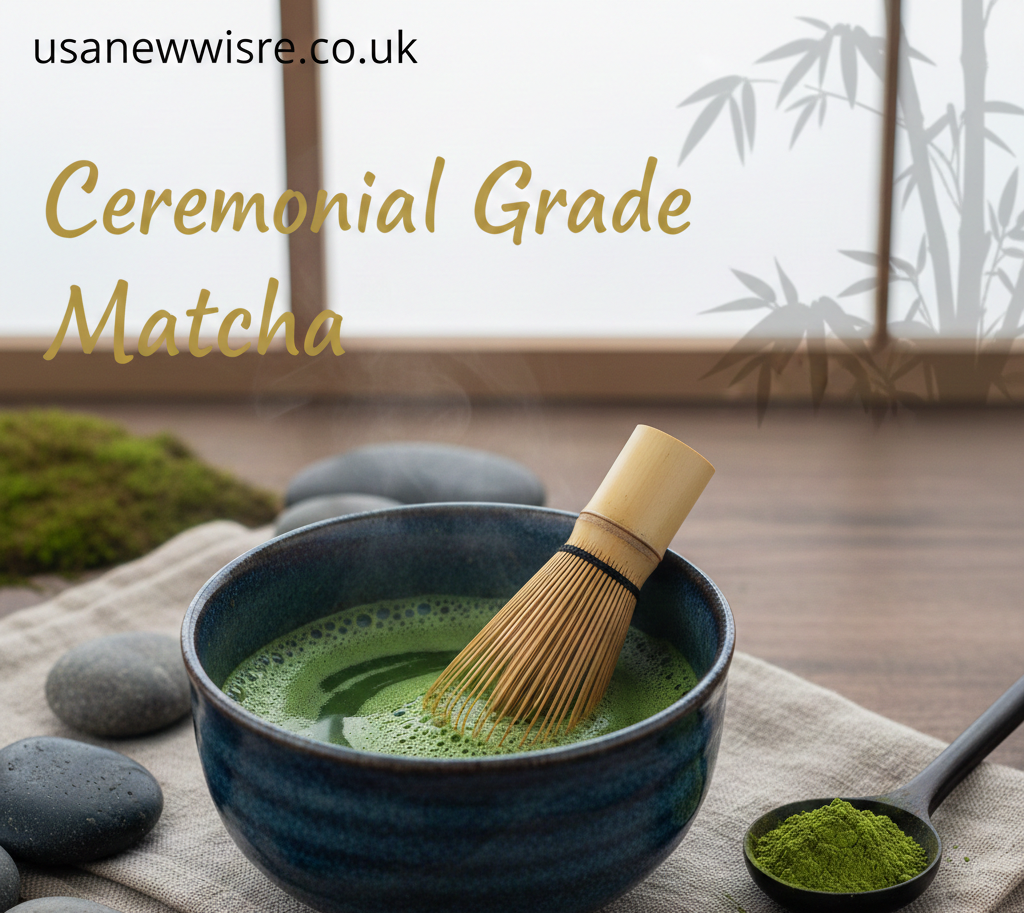
- Matcha bowl (chawan)
- Bamboo whisk (chasen)
- Bamboo scoop (chashaku)
- Fine sifter
Step-by-Step Instructions
- Sift 1–2 teaspoons of matcha into a bowl to remove clumps.
- Heat water to about 70–80°C (not boiling).
- Add 2–3 ounces of hot water.
- Whisk in a zigzag “M” motion until frothy.
- Enjoy immediately.
The foam on top indicates proper whisking.
Modern Ways to Enjoy Ceremonial Grade Matcha
Although traditionally consumed plain, many people enjoy modern variations.
- Matcha lattes
- Iced matcha
- Smoothies
- Wellness tonics
However, true ceremonial quality is best appreciated without additives.
How to Identify High-Quality Ceremonial Grade Matcha
When purchasing, consider these factors:
Origin
Look for matcha produced in Japan, especially regions known for premium tea cultivation.
Packaging
High-quality matcha is packaged in airtight, opaque containers to protect freshness.
Ingredient List
It should contain only one ingredient: 100% pure matcha green tea powder.
Harvest Season
First-harvest (first flush) matcha typically offers superior quality.
Storage Tips for Freshness
Matcha is sensitive to light, heat, air, and moisture.
To maintain quality:
- Store in an airtight container
- Keep in a cool, dark place
- Refrigerate after opening
- Avoid exposure to humidity
Proper storage preserves flavor and color.
The Cultural Significance of Matcha
Ceremonial grade matcha is more than a beverage—it represents mindfulness and tradition.
In Japan, the tea ceremony emphasizes:
- Intentional preparation
- Respect for guests
- Appreciation of simplicity
- Present-moment awareness
The process of preparing and drinking matcha becomes a meditative ritual.
Ceremonial vs Culinary Matcha: A Clear Comparison
| Feature | Ceremonial Grade | Culinary Grade |
|---|---|---|
| Purpose | Drinking plain | Cooking & baking |
| Color | Bright green | Darker green |
| Taste | Smooth, sweet | Stronger, slightly bitter |
| Price | Higher | Lower |
| Harvest | First harvest | Later harvests |
Both have value, but they serve different purposes.
Sustainability and Ethical Farming
Premium matcha producers often prioritize:
- Organic cultivation
- Sustainable farming methods
- Minimal pesticide use
- Fair labor practices
Supporting reputable producers encourages environmentally responsible agriculture.
Why Price Varies
Ceremonial grade matcha typically costs more due to:
- Labor-intensive shading
- Hand-harvesting
- Stone grinding process
- Limited first-harvest supply
Quality craftsmanship influences pricing significantly.
Common Myths About Ceremonial Grade Matcha
Myth 1: All Matcha Is the Same
Reality: Grades differ dramatically in taste, color, and quality.
Myth 2: It Should Taste Bitter
Reality: High-quality matcha is naturally smooth and slightly sweet.
Myth 3: Brighter Color Means Artificial Additives
Reality: The vibrant color comes from high chlorophyll levels.
Incorporating Matcha into Daily Routine
Morning Ritual
Start your day with a mindful cup instead of coffee.
Pre-Workout Boost
Enjoy steady energy without jitters.
Afternoon Focus
Replace sugary snacks with a calming tea break.
Evening Relaxation
Choose smaller servings to maintain calm focus without overstimulation.
The Sensory Experience
Drinking ceremonial grade matcha engages all senses:
- Visual: Bright emerald color
- Aroma: Fresh and grassy
- Texture: Creamy foam
- Taste: Balanced umami sweetness
- Feeling: Calm alertness
It transforms tea into an immersive experience.
Who Should Try Ceremonial Grade Matcha?
- Tea enthusiasts
- Coffee drinkers seeking alternatives
- Health-conscious individuals
- Meditation practitioners
- Culinary explorers
Its versatility makes it accessible to many lifestyles.
Potential Side Effects
While generally safe, excessive consumption may cause:
- Insomnia (due to caffeine)
- Stomach discomfort on empty stomach
- Sensitivity in caffeine-intolerant individuals
Moderation is key.
Frequently Asked Questions
Is ceremonial grade matcha worth the price?
If you enjoy drinking matcha plain and value smooth flavor, it offers superior experience.
Can I cook with ceremonial matcha?
Yes, but it is better reserved for drinking due to cost and delicate flavor.
How long does matcha last?
Unopened, it lasts several months. Once opened, consume within 1–2 months for best freshness.
The Growing Global Popularity
Matcha has gained popularity in cafes worldwide. Wellness trends, social media, and increased awareness of Japanese tea culture have contributed to its rise.
However, authentic ceremonial grade remains rooted in traditional craftsmanship rather than trends.
Final Thoughts
Ceremonial grade matcha represents the pinnacle of green tea craftsmanship. From careful shading and hand-harvesting to stone grinding and mindful preparation, every step reflects centuries of dedication.
Its vibrant color, smooth umami flavor, and calming energy set it apart from other teas. Whether enjoyed as part of a traditional ritual or integrated into modern wellness routines, this premium tea offers both sensory pleasure and cultural depth